
Check Engine Light Diagnostics in Mineola, NY
Don't guess what that warning light means — get a real diagnosis from the experts at Mineola Auto Service Center.
That little amber glow on your dashboard is your vehicle's onboard computer telling you something is wrong. The trouble is, a check engine light doesn't tell you what is wrong. It could be a gas cap that didn't click shut, or it could be a failing catalytic converter quietly costing you fuel economy and setting you up for a much larger repair bill. The only way to know is to read the codes stored in your vehicle's computer and interpret them correctly — and that's where a lot of drivers get steered wrong. A free code scan at a parts counter gives you a number. It doesn't give you a diagnosis. At Mineola Auto Service Center, our technicians pull the trouble codes, then do the diagnostic work that actually matters: testing components, checking live data, and confirming the root cause before anything gets replaced. Whether your check engine light just came on this morning or has been nagging you for months, we'll tell you exactly what your car is dealing with, in plain English.
What Your Check Engine Light Is Actually Telling You
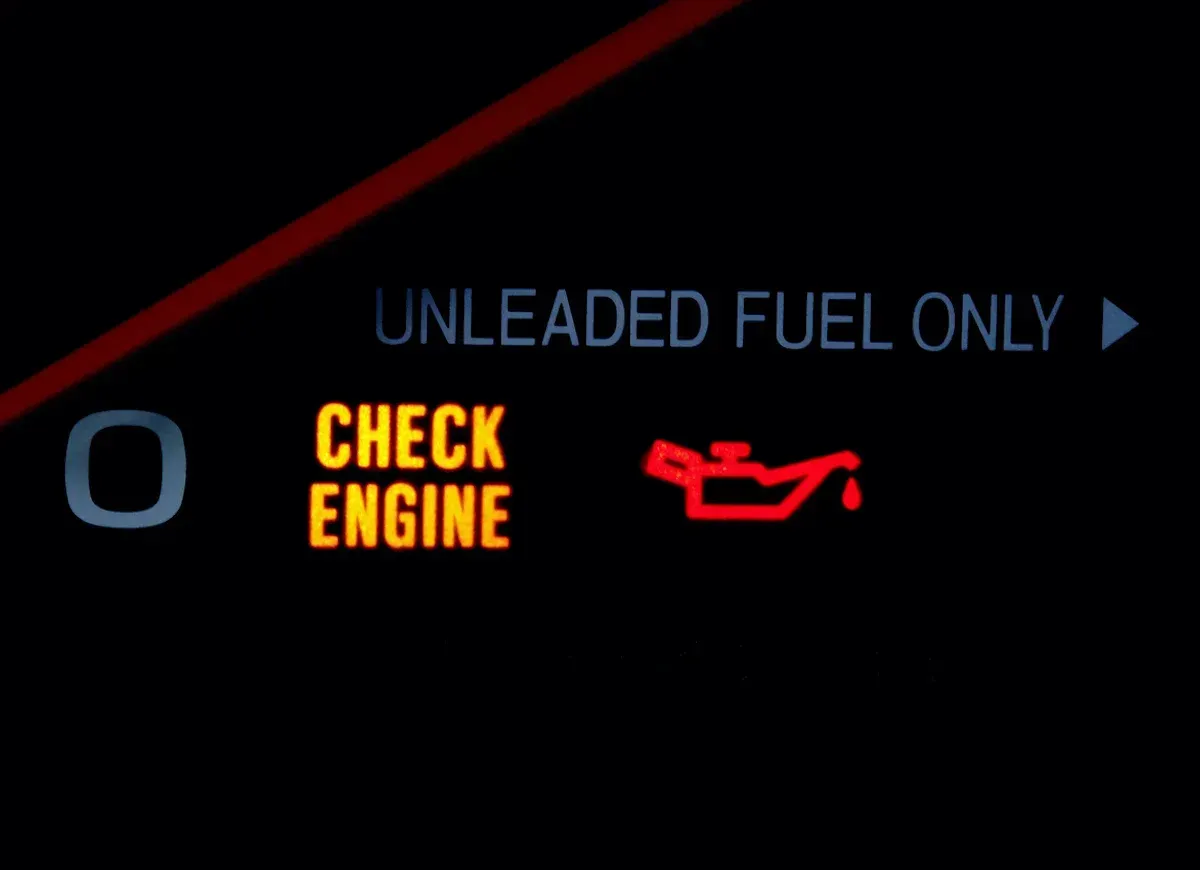
Your vehicle runs dozens of sensors that continuously monitor engine performance, fuel delivery, and emissions output. When one of those systems reports a reading outside its expected range, the computer stores a diagnostic trouble code and illuminates the check engine light.
The way the light behaves matters a great deal:
- Solid amber light — The system has detected a fault, usually emissions- or engine-related. The vehicle is typically drivable in the short term, but the problem won't fix itself and often worsens.
- Flashing check engine light — This signals a severe engine misfire. Unburned fuel is being dumped into the exhaust, which can destroy a catalytic converter in a matter of minutes. Pull over safely, shut the engine off, and arrange for a tow rather than driving it in.
One point that surprises a lot of drivers: your check engine light can be on without any noticeable change in how the car drives. No noise, no hesitation, no warning lights beyond that one. That doesn't mean nothing is wrong — it usually means the fault hasn't progressed far enough to feel yet. Catching it at that stage is precisely when repairs tend to be simplest.
Service Menu:
- Brake Repair
- Car AC (Air Conditioning) Repair
- Check Engine Light Diagnostics
- Diesel Repair
- Hybrid Repair
Common Reasons the Check Engine Light Comes On
Trouble codes point toward a system, not always a specific broken part. Still, certain failures account for a large share of check engine light complaints we see on vehicles across Mineola and Nassau County:
- Loose, cracked, or worn gas cap — A poor seal lets fuel vapor escape and trips the evaporative emissions system. It's the cheapest fix on this list and worth ruling out first.
- Failing oxygen (O₂) sensor — When the sensor measuring exhaust oxygen degrades, the engine runs on bad information. Fuel economy drops and emissions climb.
- Worn spark plugs or failing ignition coils — These cause misfires, rough idling, hesitation on acceleration, and hard starts.
- Faulty mass airflow (MAF) sensor — The MAF sensor tells the computer how much air is entering the engine. When it reads incorrectly, the air-fuel mixture goes with it.
- Catalytic converter failure — Often the downstream result of an unaddressed misfire or sensor problem. Sluggish performance, a sulfur smell, and failed emissions testing are typical signs.
- Vacuum leaks, EGR faults, and thermostat issues — Less common, but they surface regularly and are easy to misdiagnose without proper testing.
The pattern worth noticing: several of the expensive items on this list start as inexpensive items on this list. A misfire that gets ignored becomes a converter replacement. That's the real argument for having the light looked at promptly.

Symptoms Worth Paying Attention To
While you're deciding what to do about the light, take note of how the vehicle is behaving. These details help our technicians narrow things down quickly:
- Shaking, vibrating, or rough idle, especially at a stop
- Noticeable loss of power or hesitation when accelerating
- Fuel economy dropping off from what you're used to
- Hard starting or extended cranking
- Unusual smells — particularly a rotten-egg or sulfur odor from the exhaust
- Rattling, knocking, or new noises under the hood
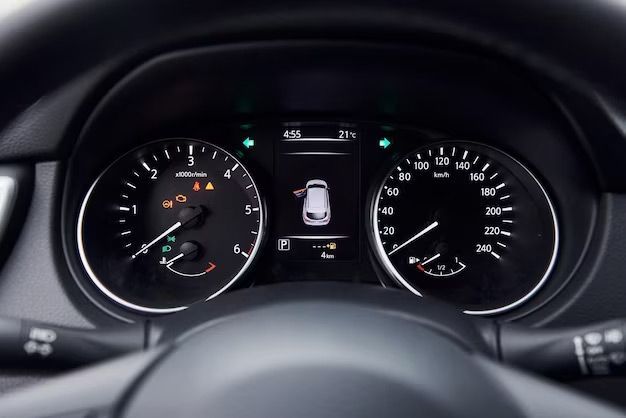
- Any additional dashboard warning lights appearing alongside it
If you're experiencing several of these together — or if the light is flashing — treat it as urgent rather than something to handle next month.
Why a Free Code Scan Isn't a Diagnosis
Plugging a reader into the OBD-II port under the dash takes about thirty seconds and produces a code like P0420 or P0301. That's useful information. It is not, however, an answer.
A code tells you which circuit or system reported a problem. It does not tell you which component failed, and it certainly doesn't tell you why. A P0420 code, for instance, is frequently read as "you need a catalytic converter." Sometimes that's true. Other times the converter is fine and a failing downstream oxygen sensor is producing the reading — a dramatically different repair. Replacing parts based on a code alone is how people end up paying for components that were never broken while the original fault stays exactly where it was.
Proper check engine light diagnostics means going further: reviewing freeze-frame data captured at the moment the code set, watching live sensor readings while the engine runs, testing circuits and components directly, and confirming the failure before recommending a repair. That's the work our technicians do at Mineola Auto Service Center, and it's the difference between fixing your car and guessing at it.
What to Expect from Check Engine Light Service at Mineola Auto Service Center
When you bring your vehicle to our Mineola shop, the process is built around getting you a clear, accurate answer:
- Full code retrieval — We pull all stored and pending codes, not just the one triggering the light.
- Data review — Freeze-frame and live data show us what the engine was doing when the fault occurred and what it's doing now.
- Hands-on testing — Components and circuits are tested to verify the actual point of failure rather than assumed from the code.
- A straightforward explanation — We tell you what we found, what it means for your vehicle, and what's involved in correcting it. No jargon wall, no pressure.
- Repair, when you're ready — If you want us to handle the work, our technicians can take care of it. If you want time to think it over, that's fine too.
You'll leave knowing what's actually going on with your car — which, for most people, is the entire reason they came in.
Frequently Asked Questions About Check Engine Lights
How long can I wait before getting my check engine light diagnosed?
How long can I wait before getting my check engine light diagnosed?
There's no fixed window, and anyone who gives you a specific number is guessing. What we can tell you is that the risk profile changes based on the situation. If your check engine light is flashing, waiting isn't an option — that indicates active misfire conditions capable of damaging the catalytic converter quickly. If the light is solid and the vehicle drives normally, you have more flexibility, but the fault is still there and many causes worsen over time. A minor misfire left unaddressed for months can turn into converter damage. A failing oxygen sensor costs you fuel economy every single day it goes unrepaired. Our recommendation is to have it diagnosed within a reasonable window rather than adapting to the light being on, because early diagnosis usually means the simplest and least expensive version of the repair. Waiting rarely improves the situation and often complicates it.
Will my check engine light turn off by itself once the problem is fixed?
In many cases, yes. If the fault has genuinely been corrected — a properly tightened gas cap, for example — the vehicle's computer will typically extinguish the light on its own after it completes several successful drive cycles and confirms the system is operating within range. That process can take anywhere from a few trips to a few days of normal driving depending on the vehicle and the specific monitor involved. However, some faults require the code to be cleared with a scan tool after the repair. And it's worth knowing that clearing a code without fixing the underlying problem only buys you a short reprieve; the light will return once the computer detects the fault again. If your check engine light keeps coming back after being cleared, that's a strong indication the actual root cause was never identified.
Does a check engine light affect New York State inspection?
Yes, and this catches a lot of drivers off guard. New York's inspection includes an OBD-II emissions check for most vehicles, and an illuminated check engine light results in a failure regardless of how well the car drives. Your vehicle can feel perfectly fine, get reasonable gas mileage, and still fail inspection solely because that light is on. Additionally, if the codes were recently cleared, the vehicle's readiness monitors may not have completed their self-tests yet, which can also cause a failure — so clearing the code on the way to the inspection station isn't a workaround. The practical approach is to have your check engine light diagnosed and the underlying issue repaired ahead of your inspection month, giving the vehicle time to complete its drive cycles and register as ready.
How much does check engine light diagnostics cost?
Diagnostic pricing varies based on the complexity of the fault, and we'd rather quote you accurately than throw out a number that may not reflect your situation. Some check engine light issues are identified quickly; others involve intermittent faults that require considerably more testing to isolate. The best way to get a clear answer is to contact our Mineola shop directly with your vehicle's year, make, model, and a description of what's happening — we're happy to walk you through what to expect before you commit to anything. What we can tell you is that proper diagnostics consistently costs less than replacing parts that weren't broken, which is the alternative when a repair is based on a code alone rather than actual testing.
My check engine light came on but the car drives completely normally — is something really wrong?
Almost certainly, though not necessarily something dramatic. The check engine light illuminates when the onboard computer detects a reading outside acceptable parameters, and plenty of those conditions produce no symptom a driver can feel. Evaporative emissions faults, early-stage oxygen sensor degradation, and certain catalytic converter efficiency codes routinely fall into this category. The car drives fine because the fault hasn't progressed to the point of affecting performance yet. This is actually the ideal time to have it looked at — the problem is still small, the repair is typically at its simplest, and you avoid the scenario where a minor fault quietly cascades into a larger one. A light with no symptoms isn't a false alarm. It's an early warning, and early warnings are worth acting on.
Who Should Have Their Check Engine Light Checked
If the light is on, the answer is essentially everyone. But some drivers have more riding on it than others:
Commuters running the Long Island Expressway, Northern State, or Jericho Turnpike daily. Highway miles turn small drivability problems into roadside problems fast. A misfire you can live with around town is a different situation at 65 mph.
Anyone facing a New York State inspection. An illuminated check engine light means an emissions failure in New York, full stop. Getting it diagnosed ahead of your inspection month saves you the second trip.
Drivers preparing to sell or trade a vehicle. An unexplained warning light gives buyers and dealers an easy reason to discount your price.
Owners of higher-mileage vehicles. Sensors, plugs, coils, and converters are wear items. As mileage climbs, the light is more likely to be reporting something genuinely worth addressing.
Anyone who's been told "it's probably nothing." Maybe it is. But that's a conclusion to reach after testing, not before.
The Benefit of Addressing a Check Engine Light Early
Fixing the light isn't just about clearing a dashboard warning. Correcting the underlying fault usually restores fuel efficiency that had been quietly slipping, smooths out idle and acceleration, and reduces the strain being placed on downstream components. An engine running the correct air-fuel mixture is an engine running the way it was engineered to.
There's a longer-term benefit as well. Once a fault has been properly identified and repaired, your dashboard becomes trustworthy again. When the light stays off for months and then reappears, you know something new has happened and it deserves attention — rather than tuning out a light you've learned to ignore. Drivers who stay ahead of these warnings tend to catch problems while they're still small, which is where the real savings live over the life of a vehicle.
What Is the Most Common Reason for a Check Engine Light?
Across the vehicles that come through our shop, a loose or failing gas cap and a degraded oxygen sensor are two of the most frequent causes of a check engine light — and they sit at opposite ends of the repair spectrum, which is exactly why diagnosis matters.
A gas cap that isn't sealed properly allows fuel vapor to escape, which the evaporative emissions system detects and reports. It's genuinely worth checking before you do anything else: remove the cap, inspect the rubber seal for cracks or hardening, and reinstall it until it clicks. If that was the issue, the light may clear on its own after several drive cycles.
Oxygen sensor failure is the other heavy hitter and is far more common on higher-mileage vehicles. These sensors live in the exhaust stream and gradually lose accuracy over time. A worn O₂ sensor feeds the computer bad data, which throws off fuel trim, hurts gas mileage, and increases emissions. Left alone long enough, it can contribute to catalytic converter damage.
Behind those two, ignition components — spark plugs and coils — and mass airflow sensor faults round out the most frequent causes. The honest answer, though, is that "most common" doesn't help much when it's your car on the lift. Two vehicles with identical codes can need completely different repairs, which is why our technicians test rather than assume.
Can I Drive With My Check Engine Light On?
It depends entirely on how the light is behaving and how the vehicle is driving.
If the light is flashing, no. A flashing check engine light indicates an active, severe misfire. Continuing to drive risks rapid and expensive damage to the catalytic converter. Pull over when it's safe to do so, shut the engine off, and have the vehicle towed.
If the light is solid and the car is driving normally, you can generally continue driving in the short term — but treat it as a countdown, not a resolution. The fault that triggered the light is still present, and many of the underlying causes progress over time. What starts as a sensor issue can develop into a considerably larger repair.
If the light is solid but the car is running poorly — shaking, losing power, stalling, overheating, or making unfamiliar noises — stop driving it beyond what's necessary to get it to a shop. Combined symptoms usually point to something actively going wrong.
And regardless of how it's driving: in New York, an illuminated check engine light means your vehicle will not pass state inspection. If your inspection is approaching, getting the light diagnosed isn't optional.
Why Drivers in Mineola Choose Mineola Auto Service Center
Mineola Auto Service Center is a recognized name for automotive repair in Mineola and the surrounding Nassau County communities — Garden City, Westbury, Carle Place, Williston Park, New Hyde Park, Floral Park, and Roslyn among them. Drivers come to us for check engine light diagnostics because of how we approach the work.
Our technicians diagnose before they replace. That sounds obvious, and yet a great deal of unnecessary automotive spending traces back to shops treating a trouble code as a parts list. We test, verify, and confirm — then tell you what we found and what your options are. If the fix is a fifteen-dollar gas cap, we'll tell you that just as directly as we'd tell you about a converter.
We also explain things without condescension. You should understand what's happening with your vehicle well enough to make a confident decision about it, and that means a real conversation rather than a stack of jargon. As a local shop serving this community, our reputation is built on the drivers who come back and the neighbors they send us. That's a strong incentive to get it right the first time and be straight with people about what their car needs.
Client's Testimonials


Make an Appointment
Connect with Mineola Auto Service Center for reliable automotive care. Reach out today for personalized attention and expert solutions.
Check Engine Lights - Website Form

CONTACT M.A.S.C
IF YOU NEED IMMEDIATE HELP
DON'T HESITATE TO CONTACT US
WE ARE AVAILABLE MON-SAT